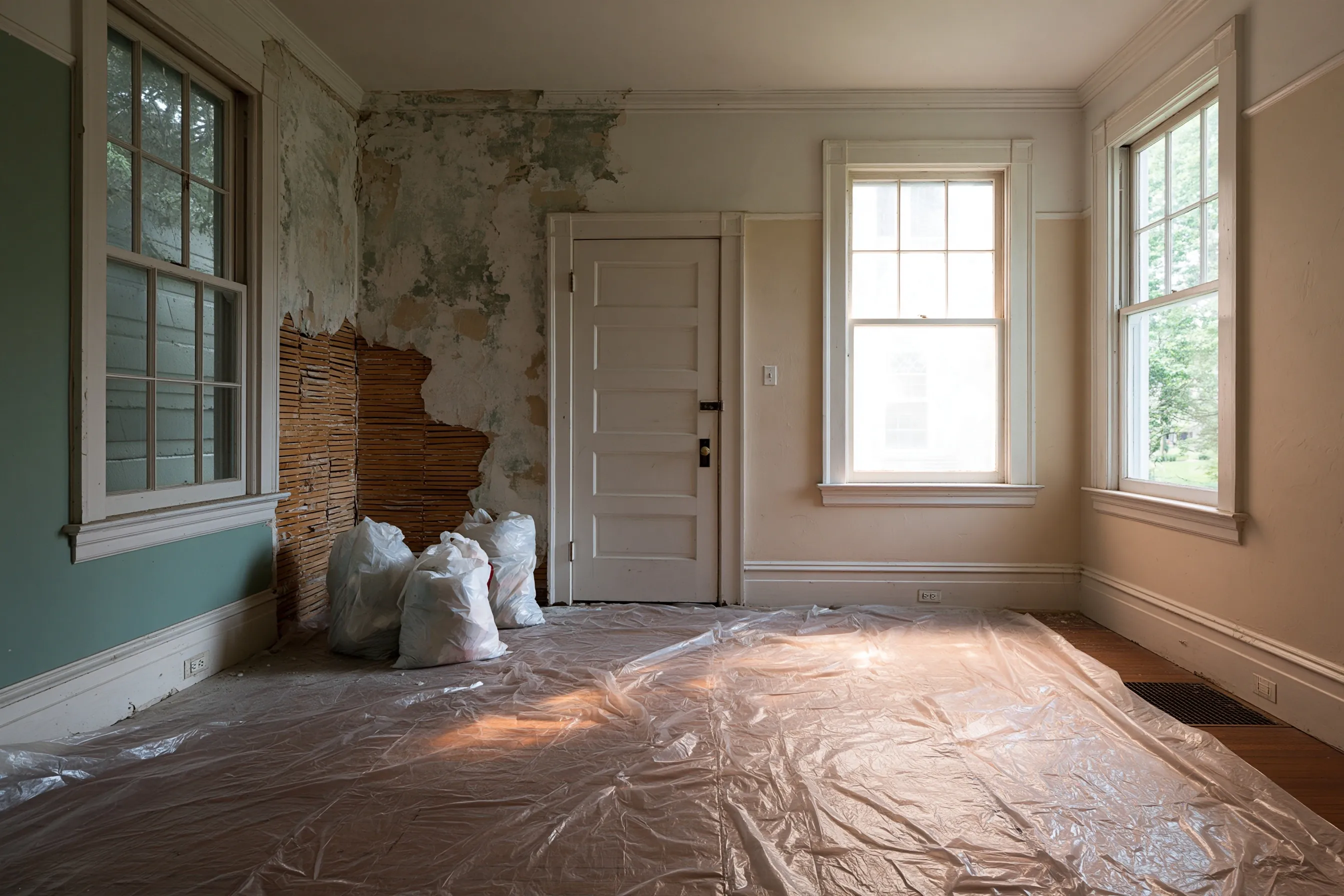
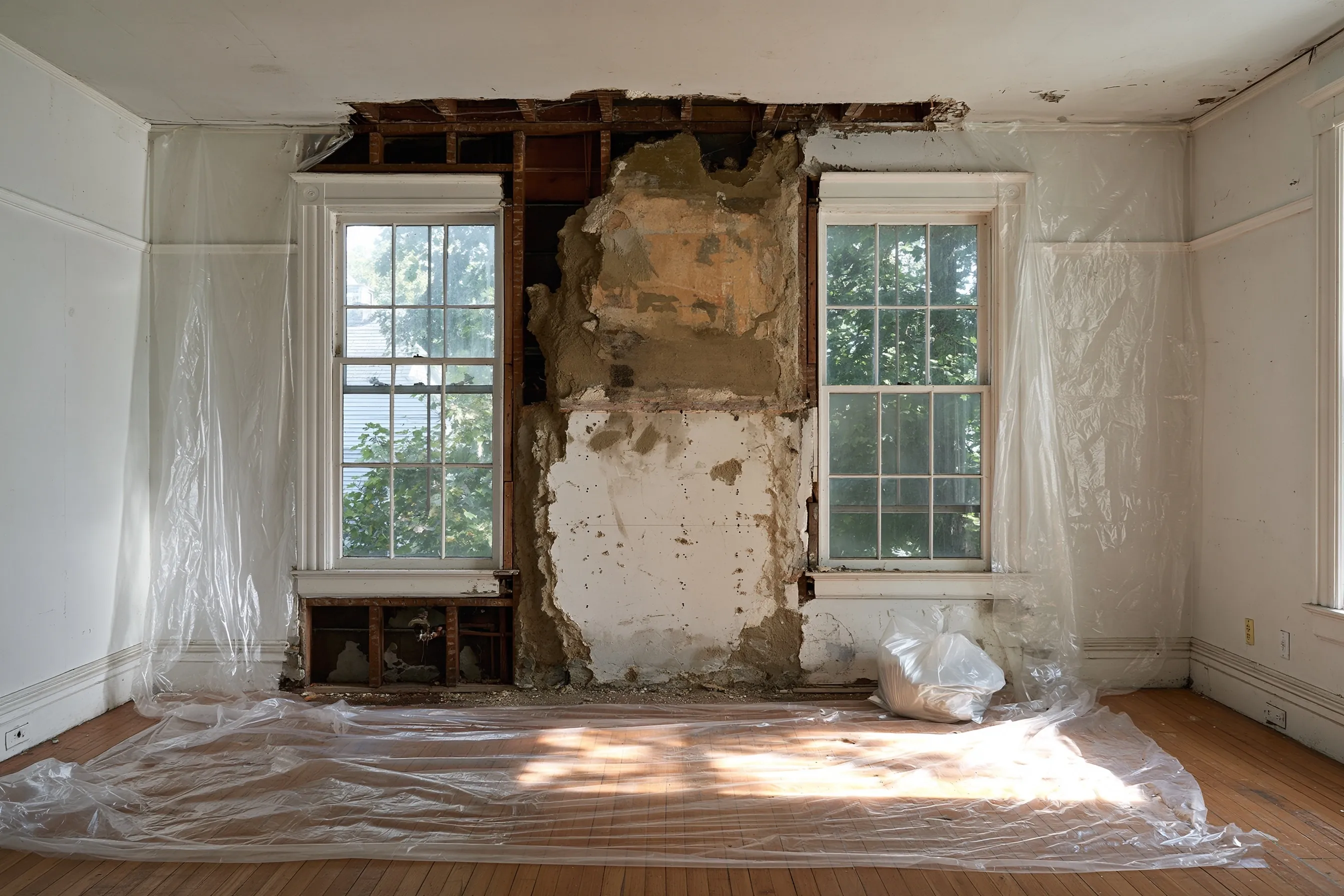
White Center is an unincorporated King County community, and Seattle Asbestos Removal works there on testing, removal and teardown prep. The housing runs from the 1930s and earlier up to new construction, so a survey is how you learn what a remodel will really touch.
About 51% of White Center’s homes were built before 1980, and about 24%, roughly 1,470 homes, before 1950. Around two-thirds are one-unit homes and about 45% of households rent, so both the owner-occupant rules and the rental rules come up.
Paper wrap on a furnace flue and hot-water pipes removed before a replacement
Example project
Home
One-story White Center house from the 1940s, with a full basement under it
Original request
Replace the old furnace and water heater, which means cutting the flue and the pipes
Testing
Samples of the flue wrap, the pipe wrap and the furnace jacket
Found
Asbestos in the corrugated paper wrap on the flue and in the white wrap on the hot-water pipes
Clear
No asbestos in the furnace's metal jacket or the newer duct tape
Amount
About 30 ft of flue wrap and 20 ft of pipe wrap
Timeline
Notice, then one day of removal
Cost
$1,800
In this example, the owners of a 1940s house in White Center are replacing the old furnace and the water heater. The heating contractor and the plumber will cut the flue and the pipes, so the owners ask for samples of every wrapped surface in the basement first.
For a remodel in an older White Center house, sampling covers plaster, joint compound, floors and any exterior materials the work will reach. Resident owners can take the samples themselves. A rental or a teardown calls for a certified inspector. See asbestos testing and surveys.
Floor tile and sheet vinyl
An older kitchen or bathroom may have a floor under its floor. Tile that lifts whole is nonfriable, and floor tile and sheet vinyl removal explains layers and backings.
Pipe, boiler and duct insulation
A basement in a house from before 1950 may have wrapped furnace ducts or a wrapped boiler. Leaving it, sealing it and removing it are all on the table, as described under pipe and duct insulation removal.
Pre-demolition abatement
A White Center demolition starts with a survey, followed by PSCAA’s notice for roofs over 120 square feet and a 10-day wait for every demolition. Our pre-demolition asbestos abatement page puts the steps in order, for owners weighing a teardown against a remodel.
Rental and apartment abatement
If you manage a larger White Center building, with five or more units, the owner-occupant exceptions are off the table. Such buildings hold 23% of the area’s housing. The rental and apartment asbestos abatement page covers what applies instead.
White Center’s housing and asbestos
Permit questions for a demolition or a major remodel go to the permit office that covers your address. Call PSCAA before you plan the work.
Older houses
About 24% of White Center homes predate 1950, and roughly 760 more come from the 1950s. Plaster and joint compound, old floors, siding added later and basement pipe or furnace wrap are the places to sample. Age points to where to look, and houses that old can test clean.
Houses and apartments
One-unit homes make up about 65% of White Center’s housing units, and buildings of five or more units about 23%. Roughly 45% of households rent, and those homes follow the rental rules rather than the owner-occupant ones.
Disposal
Waste from White Center counts as King County waste from outside Seattle. PSCAA’s list sends it to Cedar Hills Landfill in Maple Valley on Tuesday or Friday appointments, bagged twice or wrapped in 6-mil plastic, with a shipment record. Republic Services in Seattle is the other listed outlet, taking waste from any city or county and asking for the PSCAA notice.
About 45% of White Center households rent, so the rules split in two. Landlords and tenants must use a certified contractor. An owner who lives in a single-family house has another route, doing the survey and removal personally after a Single-Family Residence Notification when friable material exceeds the small-quantity limits, although PSCAA strongly encourages a certified contractor in every case.
Landlords and tenants must use a certified contractor, whether the building is a house, a duplex or an apartment block. A resident owner of a single-family house still needs a certified inspector’s survey before a demolition.
Is White Center covered by the Puget Sound Clean Air Agency?
Yes. Whatever the address, work in King County falls under PSCAA, and White Center is in King County. Expect PSCAA’s survey, notice and disposal requirements, plus the L&I certification and notice rules that apply statewide. PSCAA’s asbestos line, 206-689-4058, can answer questions about a specific job.
Who handles permits for a White Center address?
The permit office that covers your address can say what a demolition or major remodel needs. The survey and notice rules come from PSCAA and the state in either case.
Where does asbestos waste from White Center go?
Cedar Hills Landfill, by Tuesday and Friday appointment, accepts King County waste from outside Seattle. Republic Services in Seattle accepts it from any city or county. Each has paperwork requirements, so call first.
Can asbestos be sealed instead of removed?
Sometimes. PSCAA gives three choices: leave it, repair or seal it, or remove it. Sealing without a notice applies only when the material is not disturbed. If the work will disturb it, plan on removal.
We recommend calling, but do feel free to contact us using this form. We'll get back to you with a free, personalized quote or additional questions as soon as possible. We're here to help.